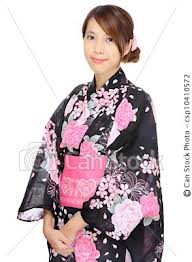
Japanese Kimono for Woman. Pretty patterns.
Japanese Kimono for Men.

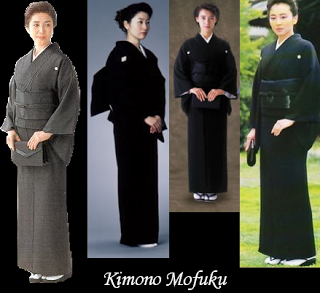
This style is called the Mofuku. It is a mourning Kimono that can be worn by both men and women
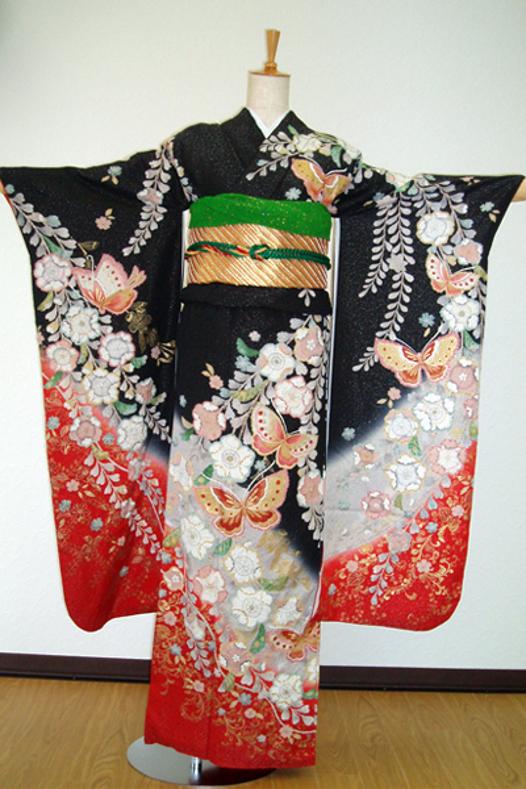
Furisodes. They have long sleeves and are very colorful.
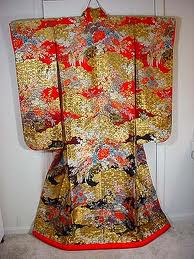
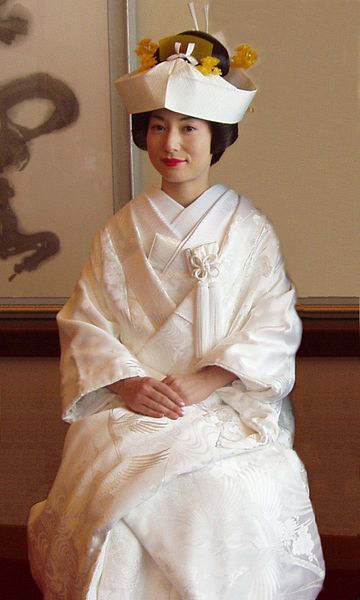
Uchikakes is what you can wear over your Kimono typically what a bride wears
Traditional wedding kimono with the headpiece
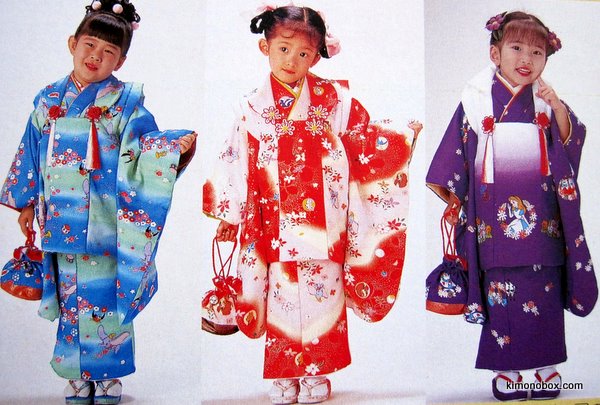
Kids in Kimonos.
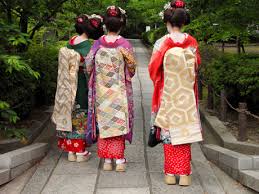
The back view of the kimono and showing the different parts
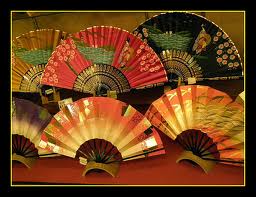
Japanese fans
Nowdays, Japanese wear modern clothing such as skirts and heels, and kimonos on special ceremonies and/or events


|
Alexandra Keith.docx Size : 131.1 Kb Type : docx |
Alexandra Keith
Japanese Fashion
Women, men, and children have worn the Japanese Kimono since the 5th century. The Japanese adopted the kimono by the Chinese. At first, the Kimono was just a women fashion. What a Kimono is exactly is a Japanese garment. They are T-shaped and straight lined that goes to the ankle. It also has very long and wide sleeves. They are wrapped around the body with the left side always over the right.
Unmarried women wear a style called furisode.
There are many different styles of the Kimono. There are traditional and formal and it also goes to casual. Nowadays, Men wear them on special occasions. Single women wear a different style. If you are not married, the Kimono sleeves are longer to indicate you are single. The Kimono varies from fabric, color, and accessories. Men’s Kimonos are typically one color and shape. They are usually black or a darker color. Silky Kimonos are the most desirable. But they are typically made out of cotton and polyester and that reflects a more casual style.
There are six different types of styles a women can wear: furisode, uchikake, houmomgi, yukata, tomesode, and mofuku. Furisode is distinguishable by its long sleeves and silk. The majority of Furisode Kimonos are very bright and colorful. Unmarried women also wear them and to say that they’re an adult so they are able to get married. An Uchikake is a full length robe you wear over the Kimono. What a Japanese bride wears during her ceremony is a uchikake. It is a wedding coat with a long trail. The Houmongi is a semi-formal Kimono with a lot of design patterns. It is for women of all ages. A Yukata is a garment made of cotton. It can be worn by both men and women. They are worn for summer events so they are a little more casual. They carry wallets, cellphones, sunglasses, and tissues. What I found interesting with the Yukata is it is usually worn in the back but if you are a prostitute the bow is worn in the front. A Tomesode is an expensive formal dress worn by married women. A Mofuku can be worn by both men and women. What is distinctive about this one is that you wear this kind of Kimono when you are in mourning. When someone has died, they wear an all black Kimono called the Mofuku.
When doing research, Ayaka Ozaki was telling me that Kimonos are mainly used for special occasions and ceremonies. While staying in Japan, we participated in a Tea ceremony. I traveled in a group of 10 and we all sat in a square in a traditional Japanese room. One male and several females were all dressed up in Kimonos. So it makes sense what Ayaka was telling me. There are a lot of traditions here in Japan. When you participate in traditions Japan has had for thousands of years, they dress up in Kimonos. Also another ceremony is coming of age. When you come of age to become an adult, you wear a Kimono to celebrate this event.
There are many steps on how to actually put on a Kimono. There are a lot of parts and it is crucial you know how to properly put one on yourself. This goes back to the Japanese tradition of Kata which means a way of doing things. There are steps on how to put one. In addition to the Kimono itself, you also must have a jubon, a koshi himo belt, a datejime, an obi makura belt, and white tabi socks. You need to put on the white tabi socks first because it would be harder to put them on after the kimono. After this, you put on the slip, which is called the juban. What the juban is exactly is a white cotton top and skirt. After this, you will put on the actual Kimono. You need to make sure the back seam is centered. You should wrap the right side over to the left side of your body, overlapping it with the left side. You need to adjust the white slip collar to be even on your neck. It needs to be under the kimono collar. After you put on the kimono, you should pull the kimono so the ends will be at your ankle. Kimnos are a little long but you are able to adjust the length by pulling the ends so it meets your ankles. While you hold the extra material at your waist, you should tie the koshi himo belt below the material. You need to cross the belt in the back and tie it in the front. After this, straighten the material and bring some down to cover the koshi himo belt. Then you will need to take the datejime belt and wrap it around your waist over the koshi himo belt. “What you should do is tie the belt in the front so it leaves overlapped kimono fabric visible. The excess fabric from the kimono needs to hang out evenly below the belt because you need to see the fabric. The very last step is to put the obi makura into place and wrap the obi. You tie both ends of the obi together, folding it across your waist and tightening it at the center, Then slide it to your back, straighten yourself out a bit, and you should be all dressed up in your kimono!” (http://www.wikihow.com/Dress-in-a-Kimono).
Going back to some of the history of the kimono, during the Kamakira period (1192-1338), both women and men wore kimonos that were very bright and colorful. Warriors dressed in particular colors to show that they were the leaders and it made them distinguishable during the time. During the Edo period (1603-1868), the Tokugawa warrior clan ruled Japan. They divided everyone and people became distinctive by their kimonos by color. The uniforms they had to wear consisted of the actual kimono, a sleeveless garment, and a hakama, which is equivalent to a skirt. With so many to make during this time, skilled crafters were able to make kimonos and it became an easier task for them.
For a long time, Japanese wore street clothes while they were out, and wore a kimono while at home. They would cover the kimono in an apron or duster. Again, the furisode kimono was used for single women.
During the Meji period (1868-1912),Japan got heavily influenced by the Western culture. The government at this time actually encouraged the people of Japan to wear western clothing. Nowadays, the Japanese rarely wear kimonos for everyday use. They are now used for special occasions such as weddings, tea ceremonies, funerals, and other special events.
When we traveled to Kyoto, Japan, we saw a lot of traditional Japanese women in Kimonos. The town was very like how old Japanese style used to be. It was very interesting to see.
Nowadays, when I observe the style in Japan, mostly everyone wears a skirt or shorts with heels. Heels have come off to me the most popular trend. Even though the kimono isn’t nearly as popular as before, I still see them being sold in modern malls. There are also a lot of fans you can buy almost anywhere you go.
Another big Japanese fashion is the hand fan. It is handheld and it’s used to cool yourself down when you are feeling warm. Its flat surfaced and you wave in back and forth and it creates airflow. The oldest existing fan is a pair of woven bamboo from the 2nd century BC. Oval and silk fans were influencing to the Japanese culture.
The Japanese hand fan were once used by warriors as a form of weapon. They were also used by dancers and performers during the performances and children would use them as toys. The Japanese say the top of the handle of the fan symbolizes the beginning of life, and ribs stand for the roads of life going out in all directions and to bring good fortune and happiness.
Sources
http://en.wikipedia.org/wiki/Kimono
http://web-japan.org/kidsweb/virtual/kimono/kimono01.html
http://en.wikipedia.org/wiki/Hand_fan
http://www.hand-fan.org/japanese_hand_fans.html
http://www.wikihow.com/Dress-in-a-Kimono
